-
ItalianRSA
- 5 Novembre 2026
Report of the World Forum for Women in Science (WFWS) 2026
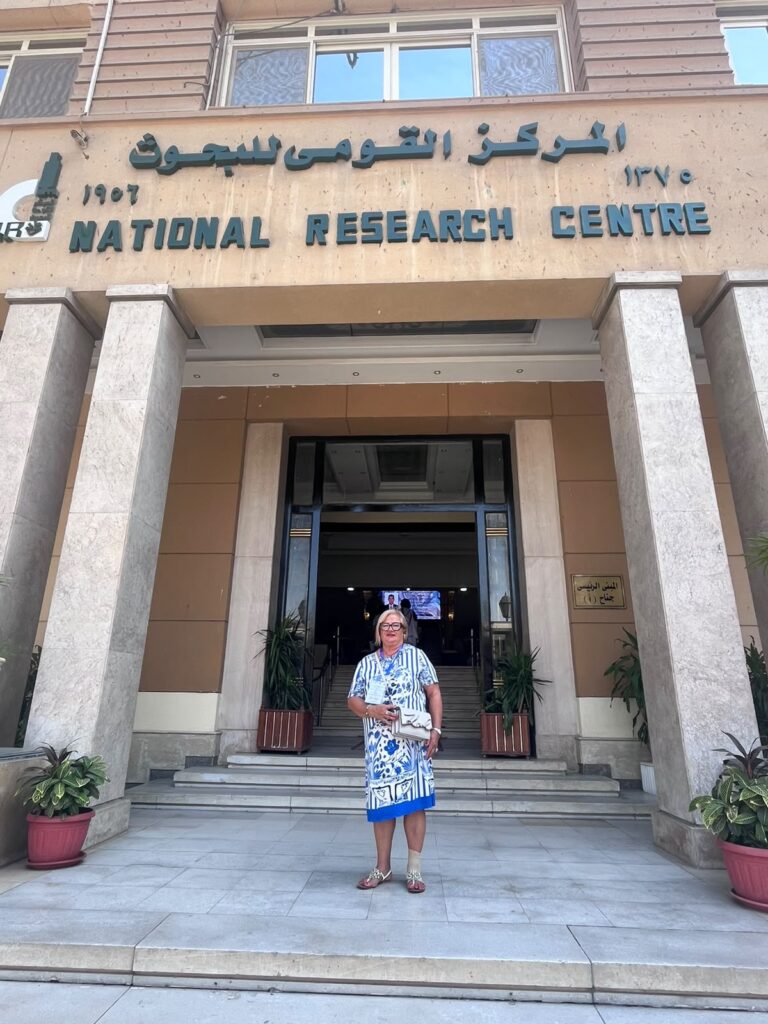
National Research Center, Giza, Egypt
8-10 September 2026
Entrepreneurship and Scientific innovation by tackling the Women Digital Divide Gap –
Digital Transformation is reshaping Education STEAM and AI
Giovanna Avellis
ICoRSA Director, ITARSA Chair

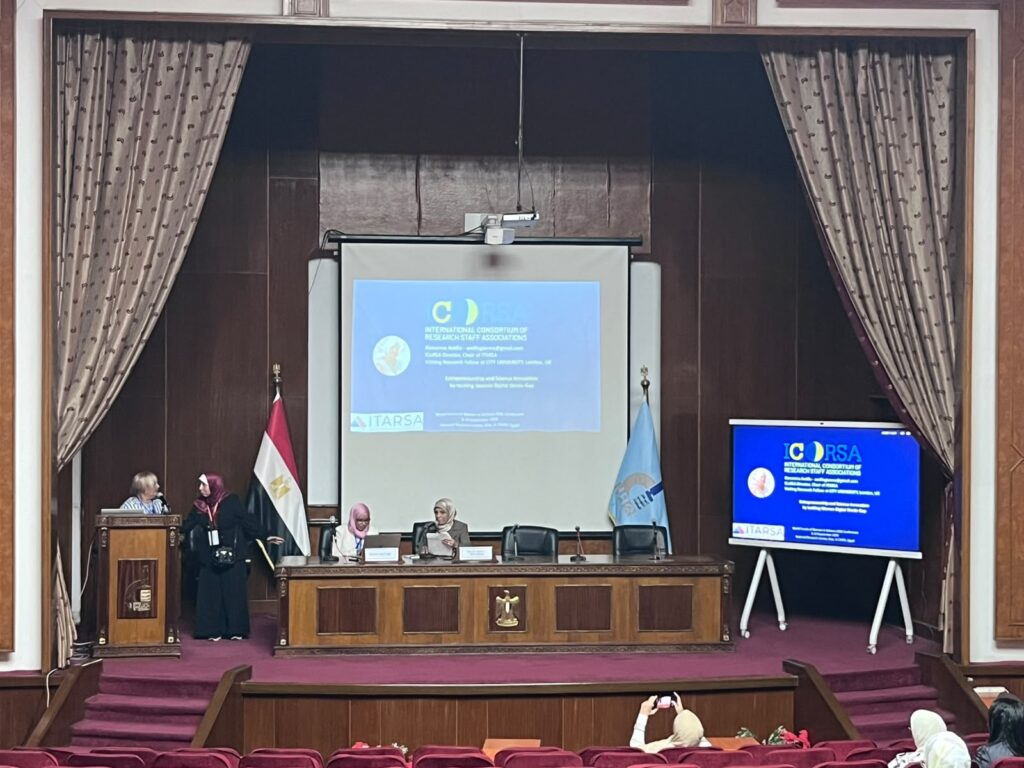
G. Avellis was invited speaker at WFWS2026, World Forum for Women in Science, at National Research Center, Giza, Egypt 8-10 September 2026, and presented a paper on the work done in Women20 WG “Education STEAM Digital and AI”, namely she described the three main recommendations made by W20 WG.
She made several contacts with the participants of WFWS2026 and received positive feedback on her presentation, introducing to the audience the ICoRSA organization and explaining in the final slide the reasons to join ICoRSA showing the QR Code of ICoRSA for membership.
Women’s entrepreneurship, financial inclusion, and participation in science and innovation are central to inclusive and sustainable growth. Improving gender balance in entrepreneurship can strengthen job creation, tax revenues, innovation, and community well-being, while generating broader macroeconomic gains. Achieving these outcomes requires inclusive legal, policy, and regulatory frameworks that support women entrepreneurs from start-up through scale-up, secure equal rights to asset ownership and finance, and provide tailored education, mentoring, and business-development support in emerging sectors, including artificial intelligence (AI), the blue and green economies, the care economy, and space. At the same time, persistent implementation and financing gaps in education, STEAM, and digital inclusion are reinforced by discriminatory social norms and stereotypes. These barriers limit women’s and girls’ participation across educational pathways and in an increasingly AI-driven economy. This paper builds on Women20 (W20) recommendations to propose a policy framework centred on: (1) fully funded, gender-transformative digital inclusion and STEAM-to-employment programmes; (2) a Global Index on AI and Gender Equality; and (3) rights-based, gender-responsive, and future-ready AI and digital governance. We also propose implementation indicators and recommends targeted scholarships, fellowships, and funding schemes for women and girls—especially those from marginalized communities—pursuing high-growth STEAM fields and digital innovation across the education-to-employment continuum.
Digital transformation is reshaping education, employment, public life, and democratic participation. Yet women and girls, especially those in rural, low-income, remote, disabled, Indigenous, migrant, and otherwise marginalized communities, taking into account national statistical practices, remain disproportionately excluded from digital access, STEAM pathways, AI governance, and safe participation in online civic space.
Closing the gender digital divide is a clear economic acceleration strategy for G20 economies, not a peripheral inclusion agenda.[1]GDIP estimates that digital exclusion has already cost $1.2 trillion in economic value, with a further $511 billion at risk without urgent action;[2] and GSMA reports that women in low- and middle-income countries remain 12% less likely than men to use mobile internet, with 200 million fewer women than men online and 13% and 7% gaps in smartphone and mobile ownership.[3] These gaps suppress productivity, tax revenue, labour-market depth, and returns on digital infrastructure investment. The Stanford HAI 2026 AI Index shows that AI capacity is increasingly central to economic competitiveness, yet no country approaches gender parity among AI researchers and developers, with leading performers still near or below one-third female representation.[4]
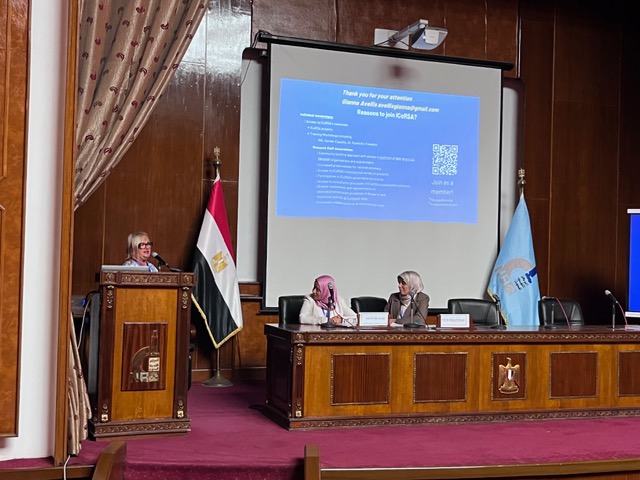
We described the measures that W20 recommended to G20 Leaders, respectively:
:
- Implement fully funded, gender-transformative digital inclusion and STEAM-to-employment programs that equip women and girls, especially those in rural, underserved, and marginalized communities, with affordable access to devices, data, connectivity, digital public infrastructure, accessibility, online safety, and basic, advanced, and emerging digital skills. These programs should prioritize high-growth fields including AI, electronic engineering, informatics, cybersecurity, data science, digital public infrastructure, and green/digital innovation, and should be co-designed with women’s organizations, civil society, educators, local communities, and the private sector. Funding should include targeted subsidies, scholarships, fellowships, community-based training, mentorship, internships, apprenticeships, leadership development, anti-harassment protections, decent work pathways, and gender-disaggregated monitoring.
- Develop a Global Index on AI and Gender Equality to track, report progress and drive accountability across G20 countries. National governance frameworks should be based on principles of responsible and ethical AI, address inclusive and gender-representative data for AI, drive women’s participation in AI development and decision-making, and include assessment of gender impacts throughout the AI lifecycle. The Index should measure women’s participation in AI research, development, governance, and decision-making; the use of gender-representative and intersectional data; gender impact assessments across the AI lifecycle; safeguards against algorithmic discrimination; and national measures to protect women’s agency, privacy, bodily autonomy, political participation, and freedom of expression in digital spaces.
- Ensure rights-based, gender-responsive, and future-ready AI and digital governance that protects women’s safety, civic agency, and autonomy. G20 countries should require governments, platforms, and AI developers, consistent with national law and international commitments, to prevent, detect, and respond to technology-facilitated gender-based violence, election-related abuse, deepfakes and other synthetic-media harms, doxxing, coordinated harassment, gendered disinformation, algorithmic bias, and attacks on women’s public participation. Governments should adopt enforceable platform accountability standards, survivor-centered reporting and remedy, transparency requirements for political advertising and recommender systems, gender and human rights impact assessments for high-risk AI, regular audit and oversight mechanisms, and safeguards for data protection, information security, intellectual property, and trade secrets. These frameworks should expand women’s leadership in AI governance and protect women’s informed choices over data, identity, education, work, politics, and digital life.
In Conclusion, this work is based on the work done in the Women20, an engagement group of G20, which is recognizing that gender equality, digital inclusion, STEAM participation, digital skills, and AI governance are mutually reinforcing priorities for inclusive growth, women’s empowerment, and democratic digital transformation.[5] We further affirm the G20 trajectory from bridging the digital gender divide and advancing girls’ digital skills, to investing in STEM, closing digital gaps, promoting human-centered AI, halving the digital gender gap by 2030, strengthening digital public infrastructure, enabling responsible AI, and situating inclusive AI and digital development within global equity and development priorities.[6] We also affirm W20 recommendations from the founding W20 agenda through the most recent W20 cycle, including commitments to women’s access to digital skills, entrepreneurship, leadership, emerging technologies, and gender-responsive digital transformation.[7]
W20 recommendations are grounded in international standards requiring ethical, inclusive, rights-based, and gender-transformative approaches to AI, digital skills education, online safety, technology-facilitated violence, AI capacity-building, and South-South and triangular cooperation.[8] W20 also aligns with emerging global digital and AI governance frameworks on closing digital divides, digital economy inclusion, safe digital spaces, data governance, AI governance, frontier AI safety, inclusive AI, and responsible data policy in dialogue with African and Global South digital equity priorities.[9]
[1] Global Digital Inclusion Partnership reports (2026); Beijing Declaration and Platform for Action (1995)
[2] Global Digital Inclusion Partnership reports (2026)
[3] 2026 GSMA Mobile Gender Gap Report (2026)
[4] Stanford University Human-Centered AI 2026 AI Index Report
[5] G20 Germany Leaders’ Declaration (2017); G20 Japan Leaders’ Declaration (2019); G20 India Leaders’ Declaration (2023); G20 Brazil Leaders’ Declaration (2024); G20 South Africa Leaders’ Declaration (2025); G20 Ministerial Conference on Women’s Empowerment (2023); G20 Maceió Ministerial Declaration on Digital Inclusion for All (2024); W20 Turkey Communiqué (2015); W20 South Africa Communiqué (2025).
[6] G20 Germany Leaders’ Declaration (2017); G20 Japan Leaders’ Declaration (2019); G20 India Leaders’ Declaration (2023); G20 Brazil Leaders’ Declaration (2024); G20 South Africa Leaders’ Declaration (2025); G20 Ministerial Conference on Women’s Empowerment (2023); G20 Maceió Ministerial Declaration on Digital Inclusion for All (2024).
[7] W20 Turkey Communiqué (2015); W20 South Africa Communiqué (2025).
[8] UNESCO Recommendation on the Ethics of Artificial Intelligence; CSW67 Agreed Conclusions (2023), and UN Women CSW67 Session Outcomes; EQUALS / Her Digital Skills initiative; EQUALS Gender Transformative Digital Skills Framework; Her Digital Skills Badge, hosted by ITU Online Academy; UN Secretary-General Report on Technology-facilitated Violence against Women and Girls (2024); UNGA Resolution A/RES/78/311 on AI capacity-building (2024).
[9] UN Global Digital Compact; Global Digital Compact, Pact for the Future Annex I; UN Office for Digital and Emerging Technologies; Bletchley Declaration, AI Safety Summit (2023); Seoul Declaration for Safe, Innovative and Inclusive AI (2024); AU Data Policy Framework.