-
ItalianRSA
- 5 Novembre 2026
23 June 2026, University College Cork, Ireland
G.Avelllis
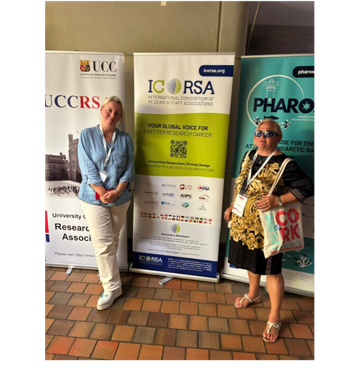
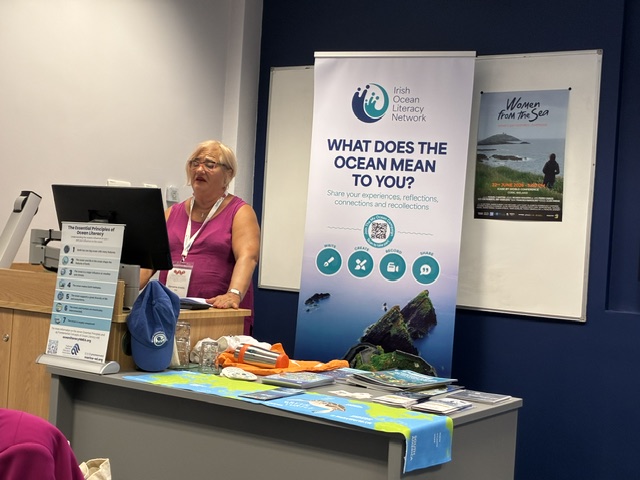
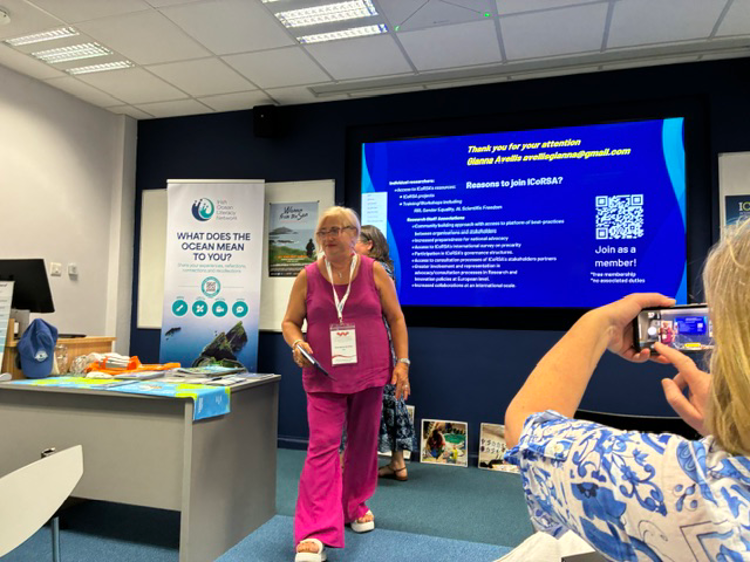
Gianna Avellis presented ITARSA and ICORSA at the ICASE2026 Conference at UCC Cork, Ireland 23 June 2026 with Rosarii Griffin, ICoRSA and University College Cork. We submitted two abstracts which were accepted for publication in the Book of Abstract of the conference, and which will be published in an extended paper, respectively:
R.Griffin, G.Avellis “Embedding Researchers in Marine Science Education: Ocean Literacy, Living Labs, and the role of ICoRSA in the EU funded PHAROS project”
Giovanna Avellis1, Gordon Dalton2, Rosarii Griffin3, Erna Karalija4, Dannie: “O’Brien5, and Silvia L. Vilches6Empowering Communities for Ocean Sustainability by Community Engagement and Stakeholder Involvement in Marine Initiatives
G.Avellis presentation highlights the role of community engagement and stakeholder collaboration in advancing sustainable Ocean initiatives, drawing on the work of the International Consortium of Researcher Staff Associations (ICORSA). Framed within the UN Sustainable Development Goals and the Ocean Decade, it demonstrates how participatory governance, education, and responsible research practices strengthen the connection between local communities and marine sustainability efforts.
Two EU-funded projects—MUSICA and PHAROS—were presented as case studies illustrating how community-driven approaches, nature-based solutions, citizen science, and co-designed governance models can enhance environmental resilience and social well-being. MUSICA focuses on integrated renewable energy systems for small island communities through a multi-use platform, while PHAROS addresses marine biodiversity restoration, pollution reduction, and pathways toward illustrated its main features in the presentation at the ICASE Conference. Central to both initiatives are Living Labs and educational sustainable blue economy.
In MUSICA project we developed a Self-Assessment Tool for Responsible Research Innovation (RRI) and platforms that enable local actors to engage meaningfully throughout the project lifecycle, from planning to implementation and evaluation. The presentation emphasizes how education and Ocean Literacy support informed decision-making, shared responsibility, and long-term capacity building. Together, these examples demonstrate how inclusive, whole-of-society collaboration can generate scalable solutions to complex Ocean and climate challenges.